
Youth as the Engine of Transformation towards “Learning for a Sustainable Future”: Participating in the 6th Asia-Pacific Meeting on Education 2030 (APMED 6)
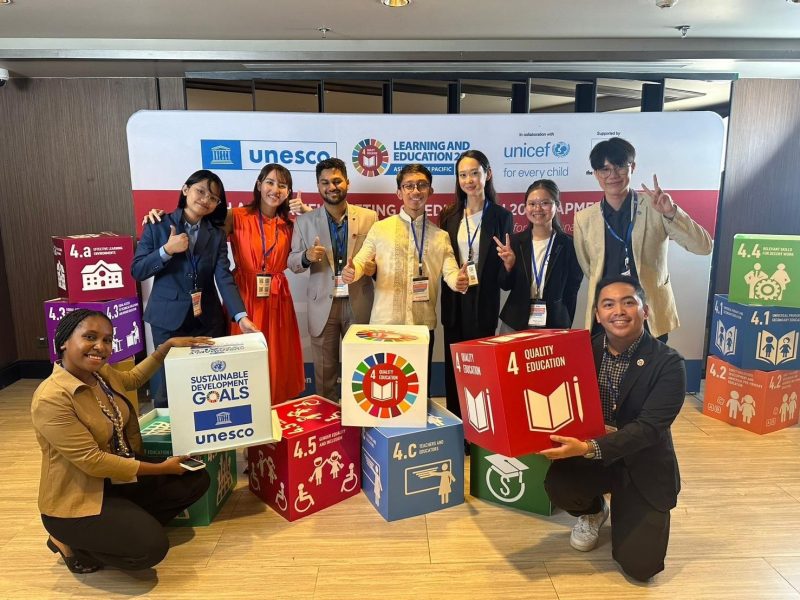
Fellow youth members at the Meeting
Hello everyone! My name is Maoko Kobayashi, a member of the Youth Committee of the Japanese National Commission for UNESCO. From 10 to 13 September 2024, the 6th Asia-Pacific Meeting on Education 2030 (APMED 6) was held in Bangkok, Thailand, and I participated as one of the panellists in its Technical Session (10–12 September). This conference brought together approximately 150 key education stakeholders from related organisations across the Asia-Pacific region and beyond to discuss how to transform learning for a sustainable future under the theme “Transforming the What and How of Learning for a Sustainable Future”. With 2030, the target year for achieving the SDGs, fast approaching, we are entering a crucial period for defining more concrete directions on “what”, and “how”, we should transform.
At the conference, diverse solutions were proposed, including increased investment in education, enhanced teacher training, and harnessing AI. The discussions centred on how to foster cooperation between nations, generations, and sectors to realise these solutions. In particular, actively leveraging the power of youth was highlighted as an important agenda item with such specific topics as how to incorporate youth voices into policy-making processes.
Amidst this focus on youth voices and initiatives, I took the stage alongside young people from Papua New Guinea, India, Cambodia and Kazakhstan at the Youth Session held on the first day of the conference. Under the theme “Young People Are The Future: Sustainability and the Future of Learning”, this session served as a platform for young participants to express their positive commitment to creating sustainable learning for the future and to collectively consider how youth should participate in the policy-making process.
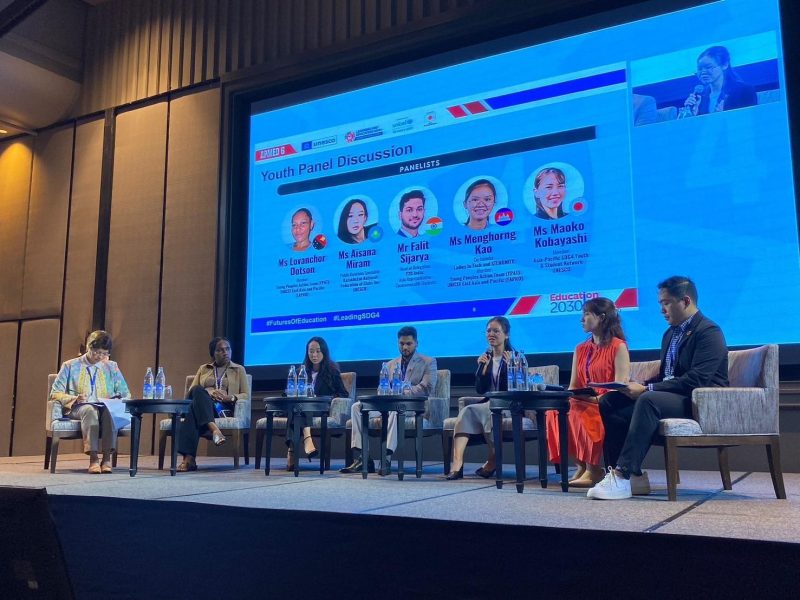
Youth Panel Discussion at the Technical Session
In the first half of the session, each panellist introduced challenges and initiatives in their respective countries. I introduced the initiative run by Anchor, a Japanese general incorporated association for which I serve as the representative director, in which youth learn together in inquiry-based learning environments (for junior and senior high school and university students). I spoke about the effectiveness and potential of the initiative. I particularly emphasised that young people are not just recipients of education but are also vital players in creating educational spaces. The second half of the session presented case examples of youth-government collaboration in different countries through dialogue between youth and government officials from each country. I spoke with a representative from Japan’s Ministry of Education, Culture, Sports, Science and Technology, introducing such activities as the Youth Committee of the Japanese National Commission for UNESCO and the working group within the Ministry of Children and Families that considers life design and encounters envisioned by younger generations. Our examples attracted attention as timely and pioneering initiatives, particularly because many countries increasingly seek to incorporate youth voices into policy-making processes.
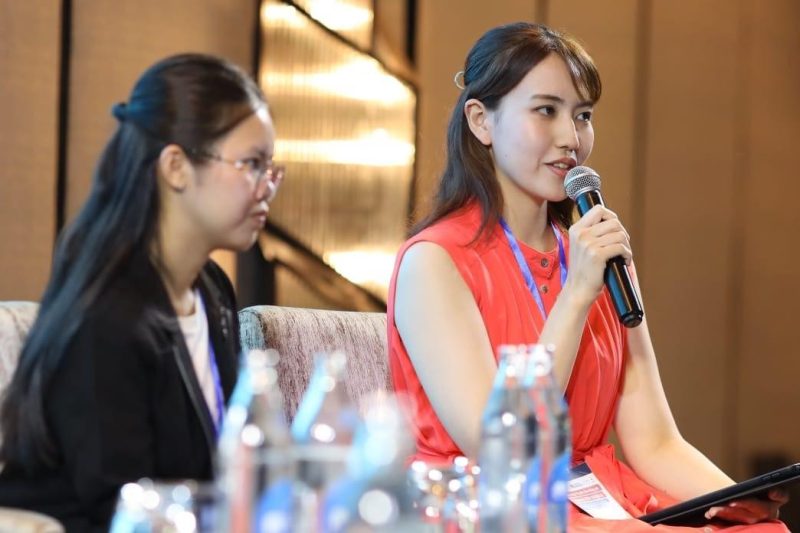
Discussion at the session
Two things particularly struck me throughout the conference, including my participation in the youth session: one is the fact that diverse generations and sectors were welcoming youth as vital stakeholders; the other is, more importantly, the enthusiasm with which youth not only spoke out but also took centre stage to initiate action and lead change. Needless to say, it is important for youth to voice their opinions. However, if they merely wait for others to help turn those opinions into action, change will be slow to materialise. That is precisely why I strongly felt that by taking the initiative, we, the youth generation, can inspire other generations with the prospect of future collaborations. Gaining these insights would not have been possible without daily effort, and as such, it was a valuable opportunity to reaffirm the potential of our role and activities.
This year marks the fourth year since the Youth Committee of the Japanese National Commission for UNESCO was established. Over the years, all committee members have continued our activities while exploring what stance we should take and how we should carry out our activities. This being so, I am very proud to have presented our activities as a pioneering example at the international APMED 6 conference. I hope that we, the Youth Committee, continue to work even more actively to accelerate progress toward a sustainable future of learning, taking the role of one of the leading youth organisations in the Asia-Pacific region and the world.
Finally, I extend my heartfelt gratitude to the staff of the UNESCO Bangkok Office and the members of the SDG4 Youth & Student Network who led the Youth Session for their positive and warm support. I also express my deep appreciation to the Ministry of Education, Culture, Sports, Science and Technology (MEXT) for providing this valuable opportunity.
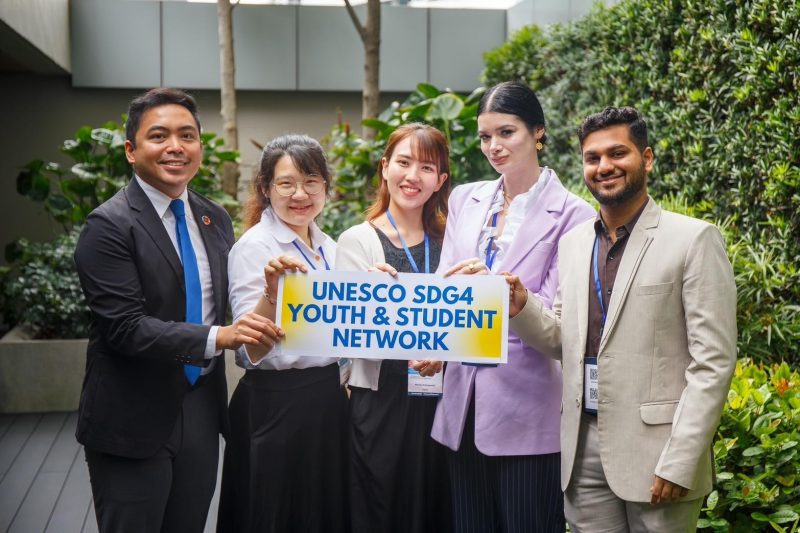
Members of the SDG4 YOUTH & STUDENT NETWORK who generously supported my presentation
DATA
| Event | 6th Asia-Pacific Meeting on Education 2030 (APMED 6) |
|---|---|
| Date | 10–13 September 2024 |
| Place | Bangkok Marriott Marquis Queen’s Park Hotel |
| Report by | Maoko Kobayashi (Youth Committee of the Japanese National Commission for UNESCO, as of September 2024) |
*For more information about the 6th Asia-Pacific Meeting on Education 2030 (APMED 6), click here. |
|
*This is an English translation of an article that was originally written and published in Japanese on 10 February 2025 (https://unesco-sdgs.mext.go.jp/column/youthnote-20250210). |