
Earth, Water, Fermentation: The Living Food Culture of Usuki, a UNESCO Creative City—Gastronomic Tourism Implemented by the Youth Committee of the Japanese National Commission for UNESCO—
Hello everyone. My name is Yoichi Sato, a member of the Youth Committee of the Japanese National Commission for UNESCO, and I’m originally from Usuki City, Oita Prefecture (a UNESCO Creative City of Gastronomy).
In early February 2025, members of the Youth Committee of the Japanese National Commission for UNESCO conducted an inspection tour titled “Gastronomic Tourism in Usuki, a UNESCO Creative City of Gastronomy” in Usuki City, a member of the UNESCO Creative Cities Network (UCCN). “Gastronomic tourism” refers to tours designed to deepen understanding of a region’s cultural background through its food. This tour targeted university students, incorporating visits to inspect local specialties and tourist attractions, exchanges with local government officials and community development stakeholders, participation in events utilising local food culture, and a hands-on experience preparing local cuisine.
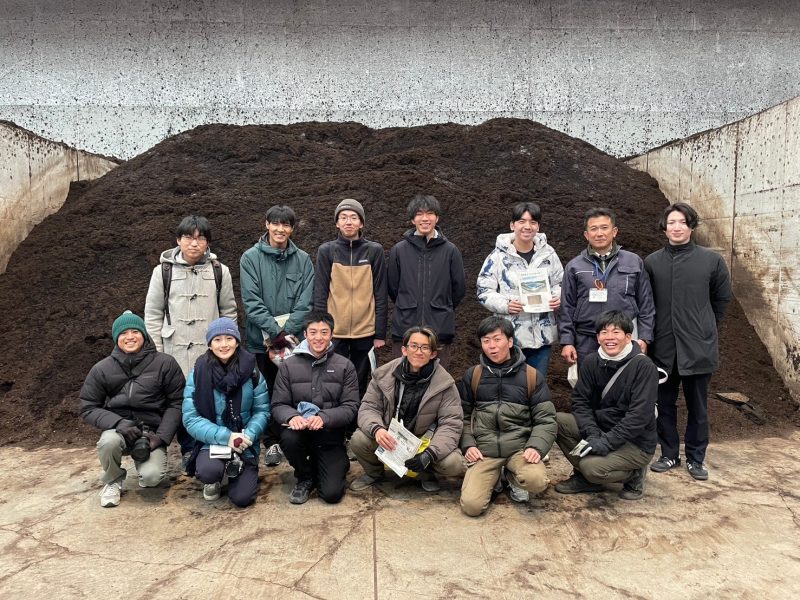
At the Usuki-shi Tsuchizukuri Centre (Usuki Soil-Making Centre)
Nine students from Keio University participated in the four-night, five-day tour with the cooperation of Usuki City. During the tour, they explored the uniqueness of Usuki’s food culture and deepened discussions on its social value. The tour’s purpose was to learn about the nature of Usuki’s society based on its food culture.
The Okomen Project: Learning about the Connection between Food Culture and the Community
Participants were members of Keio University’s Okomen Project. This project involves students from the university’s Shonan Fujisawa Campus (SFC) cultivating rice together with local farmers in the surrounding area. The aim is to pass on Japan’s agricultural culture and beautiful landscapes to future generations with the vision “Food is Agriculture, Agriculture Is Food—Creating a Society Where Locally Rooted Food and Agricultural Culture are Intimately Connected to Daily Life”.
The gastronomic tourism initiative was undertaken as an opportunity for new learning in the off-season time of the project’s rice cultivation.
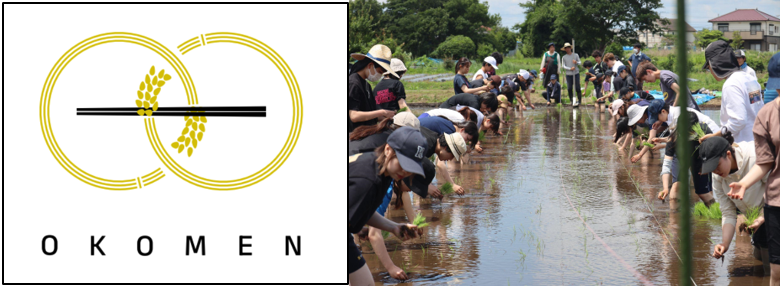
Okomen Project’s Rice Cultivation
What is Usuki’s Food Culture?
As a UNESCO Creative City of Gastronomy, Usuki City in Oita Prefecture champions its own vision of “A City of Food Culture Where People and the Environment Thrive for Generations to Come”. This vision embodies the concept of planetary health and aims to promote the health of both people and the planet. The city operates a locally based soil cultivation centre and is committed to agriculture for the benefit of local children today and for the next 100 years.
Usuki City cherishes the principle of shindo-fuji (the unity of body and land), preserving a food culture that makes use of locally sourced, seasonal ingredients. This concept is incorporated into school lunches where menus actively feature local produce, teaching children the importance of their local cuisine. Furthermore, by focusing on forest conservation and safeguarding Usuki’s water with its uniquely subtle taste, the city has developed its fermentation and brewing industries producing sake, miso, and soy sauce.
A culture of prayer, centred around shrines and temples, is deeply rooted in Usuki. This spirit of valuing the intangible and cherishing human connections (goen) is also intertwined with industries that harness microbial fermentation.
Alongside these natural blessings, the frugal wisdom of the Edo-period Usuki domain still lives on in its food culture today. Examples of this are:
- Ohan (yellow rice), coloured with gardenia fruit as a substitute for red beans
- Kirasumameshi, a rice dish using fish trimmings and sashimi scraps pickled in soy sauce, and mabusu (mixed) with okara (soya bean dregs) to increase the volume
Local cuisine like these makes full use of limited ingredients that have been passed down through the generations.
Usuki is a city that inherits the blessings of nature, a culture of fermentation, and wisdom rooted in the land. Its culinary traditions, nurtured alongside a culture of prayer, remain a source of local pride and continue to thrive today.

Preparing for the Tour—Deepening Understanding through Preliminary Study
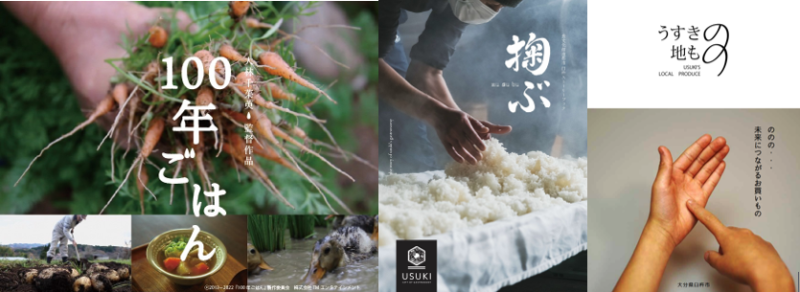
Before visiting Usuki City, the participants first watched the documentary film 100-nen Gohan (100-Year Rice), chronicling the people involved in Usuki’s agriculture and food, and then carefully read Musubu (To Gather and Connect), a series of mini storybooks introducing Usuki’s food culture as well as Usuki no Jimono (Local Products of Usuki), a brochure-size catalogue of local products chosen to be passed down for the next 100 years. This allowed them to deepen their understanding of the region’s history and culture before the visit.
Day 1: Food Culture Session—Learning the Value of Usuki’s Food Culture
The first day featured a Food Culture Session. Through a lecture by the advisor of the Usuki Creative City of Gastronomy Promotion Council, the participants learned about the background leading to Usuki City’s membership in UNNC and its significance. Subsequently, they received detailed explanations from the city’s Creative City of Gastronomy Promotion Office regarding the city’s membership process and its own initiatives.
Through this session, the participants gained a deeper understanding of Usuki’s path to global recognition as a “Creative City of Gastronomy” and the underlying values that support the designation.
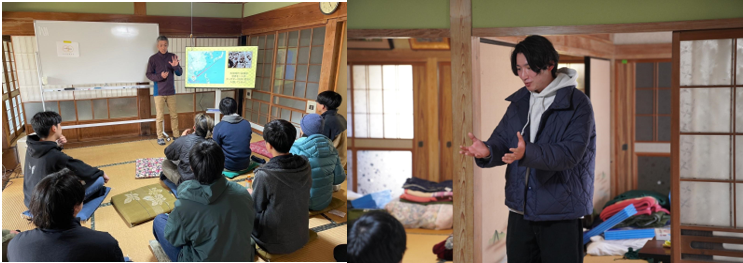
Lecture at the Food Culture Session (left) and talk by an Usuki City representative (right)
Day 2: Learning What Connects Forest, Soil and People—Understanding the Blessings and Cycles of the Land
Day 2 began with a tour of a forest serving as a learning space for local junior high school students. The participants learnt about Usuki City’s initiatives to promote forest conservation and gained first-hand understanding of the community’s coexistence with nature.
Following that, they visited the community-based café ‘quotidien’ and exchanged views with local residents. They then toured the Tsuchizukuri Centre and an organic farm, hearing from a city official about Usuki City’s soil improvement initiatives, which the city pursues as an investment in future generations despite its current financial cost. By witnessing farming practices that harness this soil to obtain the authentic flavour of vegetables, they learned about the importance of soil and the essence of agriculture.
In the afternoon, participants visited a traditional Usukiyaki pottery studio to deepen their understanding of Usuki’s history and manufacturing culture.
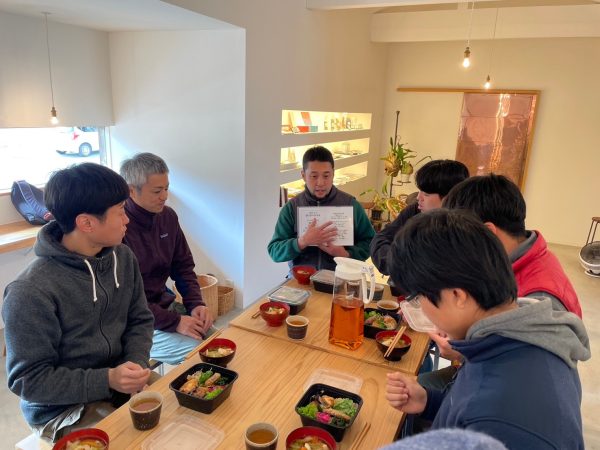
Exchange of views with local residents
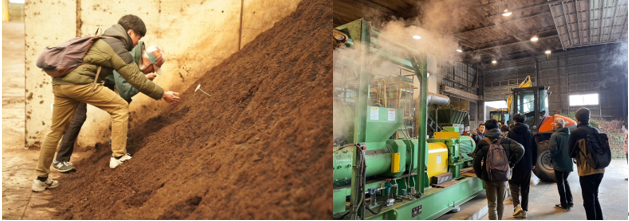
At the Usuki-shi Tsuchizukuri Centre (Usuki Soil-Making Centre)
Day 3: Where Food Culture Meets Film—Reflecting on the Essence of Food Through Cinema
On the third day, the participating students had a discussion with Chigumi Obayashi, director of the film 100-nen Gohan (100-Year Rice), exchanging views on the appeal of Usuki’s food culture and community development portrayed in the film.
Following that, they visited the Usuki Food Film Festival and watched the film We Are What We Eat. This provided an opportunity to reflect anew on how food and agriculture are directly linked to life itself, as well as on the profound value of the farmers who protect the land.
In the afternoon, the group strolled through Usuki’s castle town, appreciating its historic streetscape and local food culture, followed by a visit to a sake brewery where they learned how Usuki’s fermentation culture has been passed down and gained insight into the background behind the creation of fermented foods with the profound wisdom of utilising the power of microorganisms.
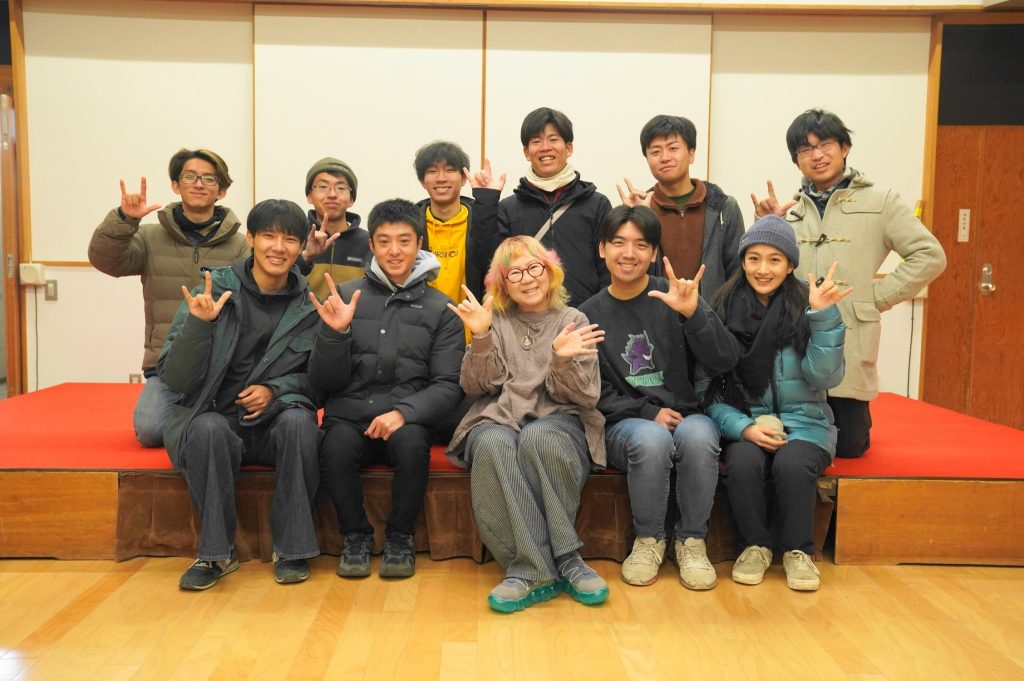
With Ms Chigumi Obayashi, director of the film 100-nen Gohan.
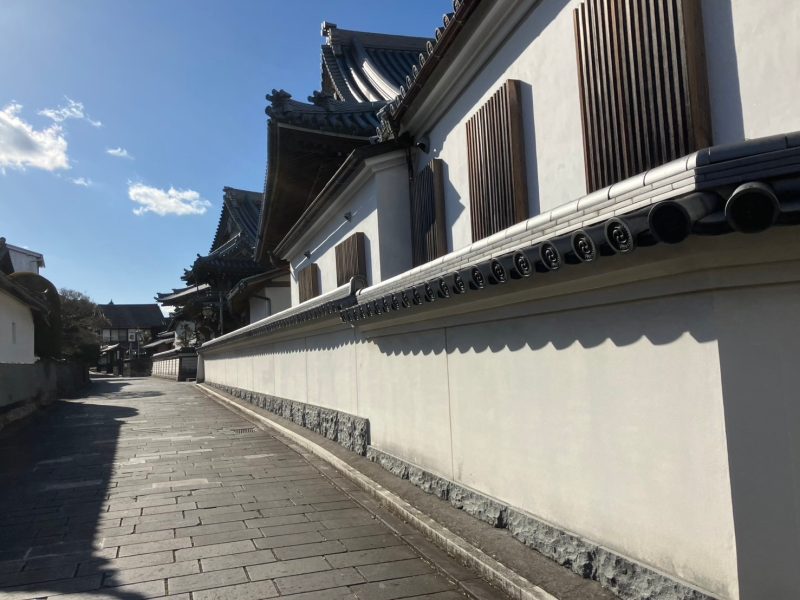
Usuki castle town
Day 4: Review of Learning
On the final day, the participating students reflected on what they learned over the course of the three-day tour and were divided into groups to organise their findings using the KJ method.
Then they had a discussion that included members of Usuki City’s Creative City of Gastronomy Promotion Office, exchanging views on the value of Usuki’s food culture and how it should be passed on to future generations.
In addition, the participants experienced preparing local dishes by actually cooking two of Usuki’s regional specialities, ohan and kayaku (vegetable soup), using locally grown Usuki vegetables. Such hands-on preparation of the region’s food led to a deeper understanding.
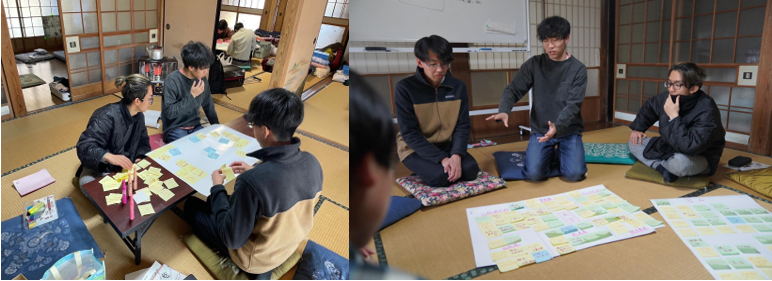
KJ method workshop
This four-night, five-day inspection tour provided a tangible experience of how Usuki’s food culture is deeply intertwined with the local natural environment and people’s way of life and thus became an opportunity to understand the culture’s value deeply.
Participants’ Reflections: The Appeal of Usuki’s Food Culture
The students who participated shared the following feedback about Usuki’s food culture:
“Thanks to this tour, I was able to think about Usuki’s food culture from various perspectives. I strongly felt that at its core lies the fundamental values we humans have in our lives: the essence of human lives, and what we fundamentally appreciate: having good food and staying healthy are both of most importance. I found that the most appealing aspect of Usuki’s food culture is not rooted in grand principles, but in the everyday lives of the people.
Moreover, the spirit of frugality, blended with the principle of shindo-fuji (the unity of body and land) that emphasises the importance of local character, exhibits a certain kind of splendour unique to Usuki, all while keeping its simplicity. This characteristic left a particularly strong impression on my sense of taste, sight, and smell. Furthermore, I understood that Usuki’s food culture was formed over many years, through the daily lives of people who use ingredients suited to the local soil, water, and air, and consume them every day”.
Another participant said, “I felt that the appeal of Usuki’s food culture lies in the story it tells”. Many participants seemed impressed by the harmony of tradition and local lifestyles that serve as the background to the unique value that Usuki’s food culture embodies.
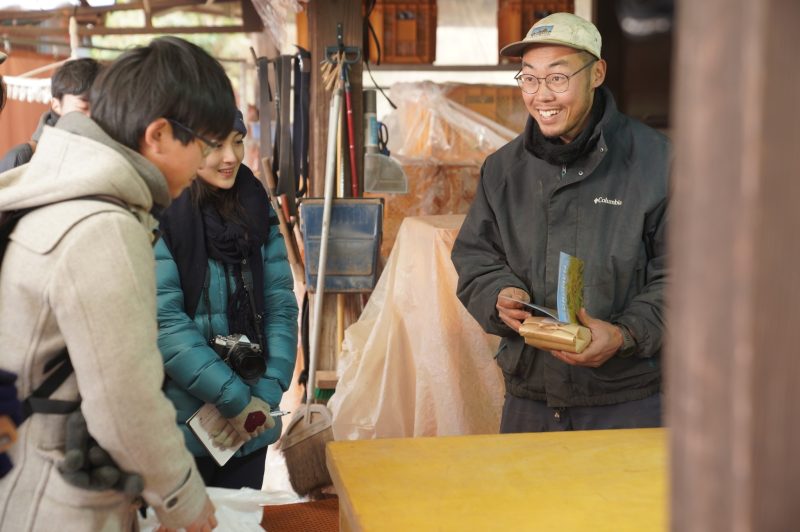
Conversation with an Organic Farmer
Shift in Awareness Through the Tour
I would like to quote one more comment as follows:
“I recognised during this tour the powerful influence that food culture has in telling a region’s story. Until now, I thought that food culture was merely one element of a region, and that it was difficult to talk about a region with that alone. However, in Usuki, I have seen that food culture powerfully expresses the region’s distinct character, not only through its UNESCO Creative City of Gastronomy designation but also through residents’ heightened awareness of food and the background of traditions preserved over a long time.
Through this tour, I learned a lot firsthand about Usuki’s history, lifestyle, and people’s values through its food culture as a gateway, an experience which changed my aforementioned view completely. Food is indispensable to daily life and vividly reflects the history of the region and the lifestyle of its people. With the experience of this tour, now I firmly believe that understanding a region’s food culture leads to understanding the region itself”.
This tour became an opportunity to learn deeply about how Usuki’s food culture transcends the status of mere food, being closely connected to the region’s history, values, and people’s lives. Now that the tour has concluded, I am keen to see how the participants apply their respective learnings to their activities in the future, with a renewed awareness that understanding food culture is understanding the region.
Post-Tour Reflections: A Food Culture That Cultivates the Earth with Time as Its Ally
Through gastronomic tourism, I realised that Usuki’s food culture is deeply connected to the local nature and the lives of its people.
Usuki’s food culture is not merely about the food; it is the very cycle of life itself, built up over a long period of time by the land and its people. Nurturing rich soil enables crops to grow healthily and to sustain the lives of those who live there, ensuring the reliable bounty of nature passed on to future generations.
On top of that, the culture of fermentation has grown on the basis of the spirit, “Take time, nurture food”. Fermented foods like miso, soy sauce, and sake need time to mature because they are the fruits of the harmony between nature’s work and human craftsmanship. Listening to the invisible work of microorganisms, preparing the optimal environment, and patiently bringing the process to completion—this delicate sensibility and accumulated technique have supported Usuki’s fermentation culture.
During this tour, the participants encountered the very essence of Usuki’s food culture: cultivating the soil and nurturing it over time. It taught us something beyond just agriculture or food processing: the importance of cultivating good things patiently and passing them on with care.
Usuki’s food culture taught the participants respect for not only the visible but also the invisible, and the wisdom of a frugal spirit that makes the most of what is here and now. I will strive, inspired by that learning, to build my own culture while cultivating the soil wherever I go with time as my ally.
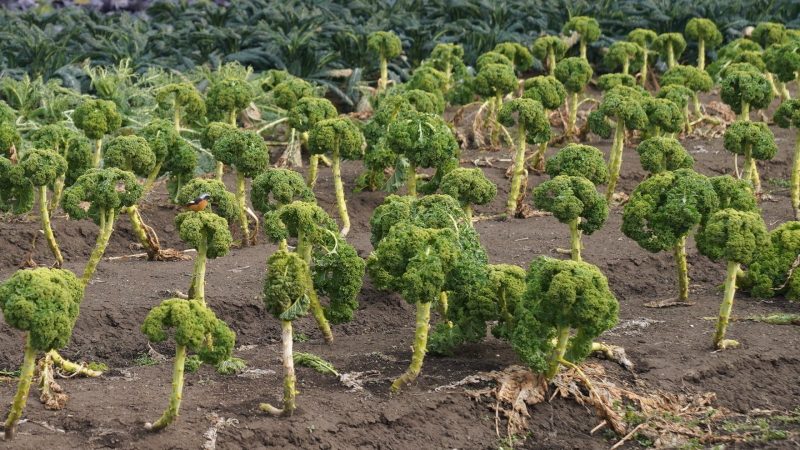
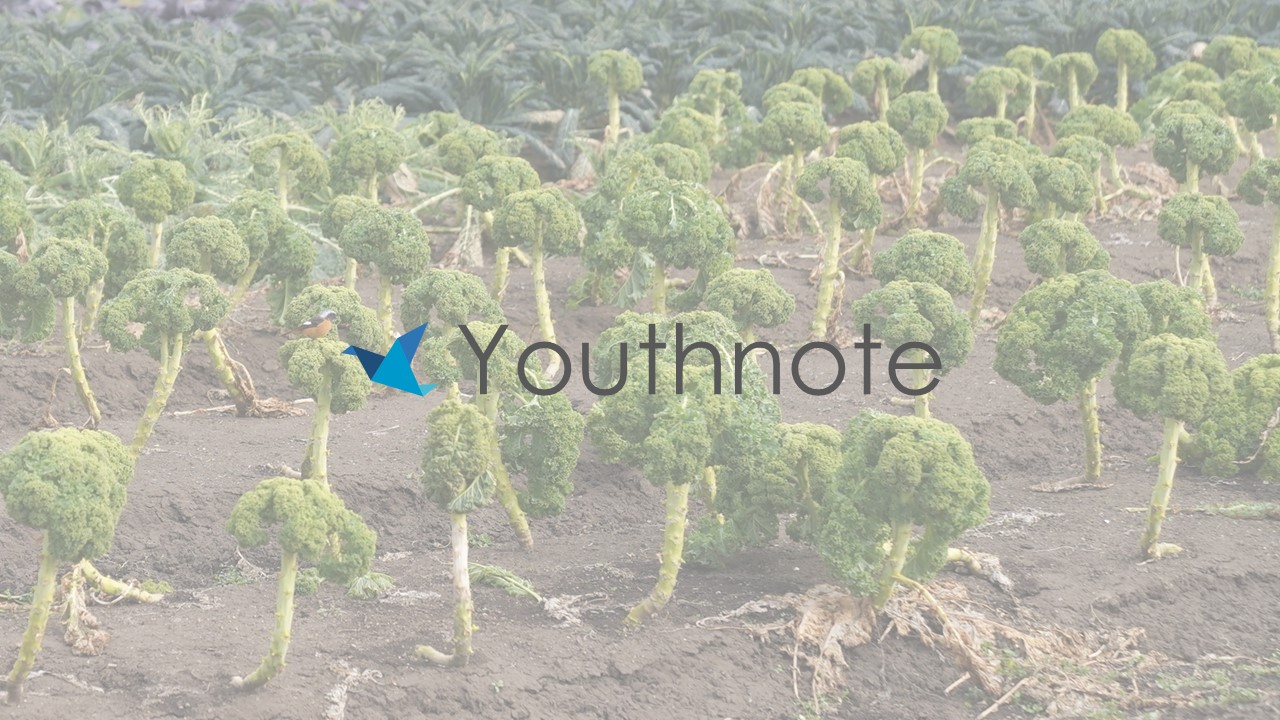
An organic farmer’s kale field with a bird perching on one of the plants
DATA
| Date | Thursday, 6 February–Monday, 10 February 2025 |
|---|---|
| Report by | Yoichi Sato (Youth Committee of the Japanese National Commission for UNESCO, as of February 2025) |
*This is an English translation of an article that was originally written and published in Japanese on 31 March 2025 (https://unesco-sdgs.mext.go.jp/column/youthnote-20250210). |