
UNESCO and I: Stories and Perspectives – Mr. Soichiro Yasukawa
As part of the ‘UNESCO WEEK 2024/25,’ we interviewed Mr. Soichiro Yasukawa on the theme ‘UNESCO and I: Stories and Perspectives.’ Mr. Yasukawa is currently working as the Chief of Disaster Risk Reduction Unit, Natural Sciences Sector of UNESCO.
Q: Mr. Yasukawa, thank you for taking the time for this interview today. First of all, to introduce yourself, could you tell us about your background and about your job at UNESCO?
In September of 2013, I was dispatched from the Ministry of Land, Infrastructure, Transport and Tourism to the Natural Sciences Sector of UNESCO as a disaster risk reduction specialist. While on assignment, I was thinking about my future career when my boss at the time was reassigned to another department. I applied for the successor position and became a UNESCO staff member in 2017. Currently, I am coordinating UNESCO’s disaster risk reduction-related projects as the Chief of the Disaster Risk Reduction Unit. At UNESCO, besides the Natural Sciences Sector where I belong, there are also disaster risk reduction projects in the Education Sector, Culture Sector, Intergovernmental Oceanographic Commission, and Communication and Information Sector. My work involves exchanging ideas with representatives of each sector and regional office to promote cross-sectoral disaster risk reduction efforts.
UNESCO supports each country with its 8 pillars. Specifically, they are: (1) Disaster Risk Reduction Using Science and Technology (Such as Artificial Intelligence), (2) Early Warning Systems, (3) Building Safety (Especially Against Earthquakes), (4) Disaster Risk Reduction in the Education Field, (5) Disaster Risk Reduction for Cultural Assets, (6) Ecosystem-based Disaster Risk Reduction, (7) Risk Governance, and (8) Post-disaster Response.
Also, my unit is UNESCO’s point of contact for the disaster risk reduction efforts of UN organizations, and is working to raise the awareness of UNESCO’s disaster risk reduction activities in the UN.
In addition to personnel planning as the Unit manager and allocation/execution management of general account budget to regional offices, my job includes the formulation of UNESCO’s disaster risk reduction strategies, such as selecting priority fields and regions and launching new initiatives. I also negotiate with donors to raise funds to complement the limited general account budget. Because I can’t update my disaster risk reduction knowledge by only conducting management and formulating strategies, I take part in the execution of leading projects at regional offices so that I don’t lose my edge.
I was originally aiming to become an architect and joined a design lab in a graduate school in Japan. But I decided to try urban development and entered the Ministry of Construction (which later became the Ministry of Land, Infrastructure, Transport and Tourism due to the reorganization of government ministries) in 1998. Since at Japanese ministries and agencies, we have to transfer to a different department every 2 to 3 years, I had the opportunity to gain experience in various fields such as urban redevelopment, building standards, the Research Institute’s planning department, architect license, national land planning, and the Cabinet Office’s disaster management. At a glance, they may seem unrelated, but looking back now, I feel these experiences have been useful in looking at problems from different perspectives.
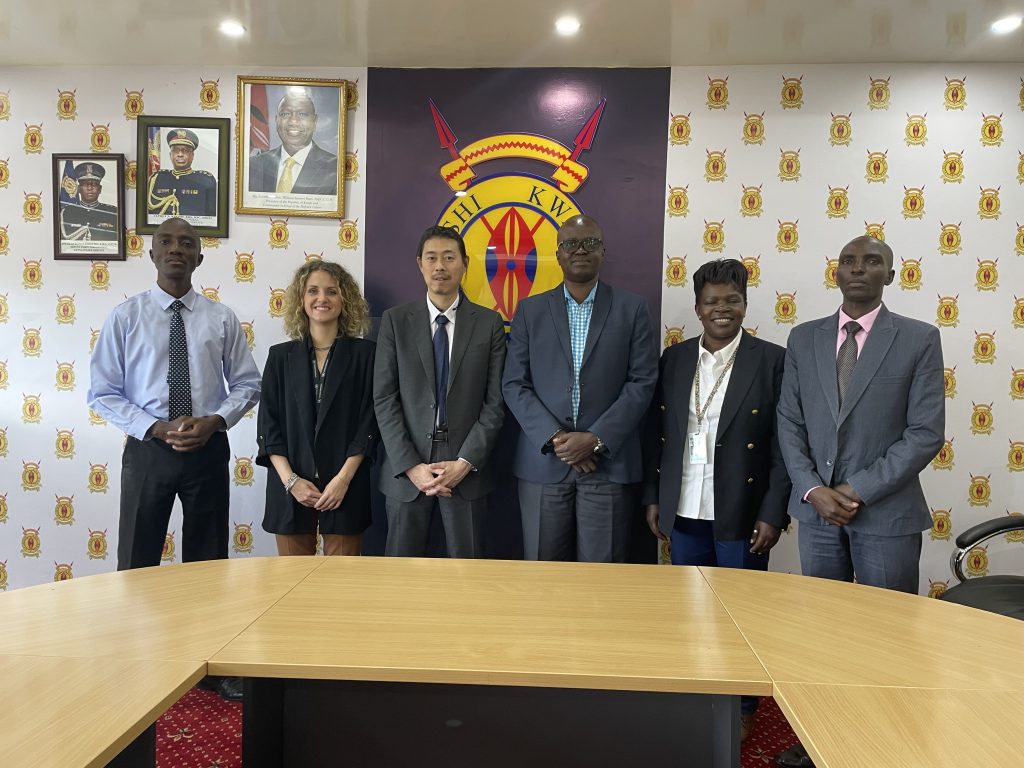
Q: Were there any challenges or difficulties you experienced as a staff member of UNESCO? It can be something you are experiencing right now. If you have any stories, please share them.
Regarding interpersonal relationships, compared to the way people commit themselves to work in Japan, I can’t expect the same level. Things don’t go as I expect them to, and it makes me anxious sometimes. One of the reasons for this, I think, is the difference sense of time. People of other countries generally think they should decide on something just before the deadline if it is far ahead, and they frequently don’t do things until the last minute. So, I feel it is difficult to implement projects by planning everything in advance.
A challenge I am faced with currently when planning my work is how to balance the impact on the job site and external impact. Of course, our goal is to reduce disaster risks in target countries and regions through our work. But there are so many countries and regions that are not fully prepared against disasters, and what UNESCO can do alone is limited. On the other hand, in order to get people to work with us and provide financial assistance to our activities, visibility becomes important. If we pay less attention to public relations activities and presenting major strategies in trying to make a positive impact on the job site, it may lead to a dilemma of losing potential collaborators. And if we take on a project that looks good, it may catch the eyes of potential financial sponsors, but it may not be the best solution for the local community. There are times when we have to make difficult choices.
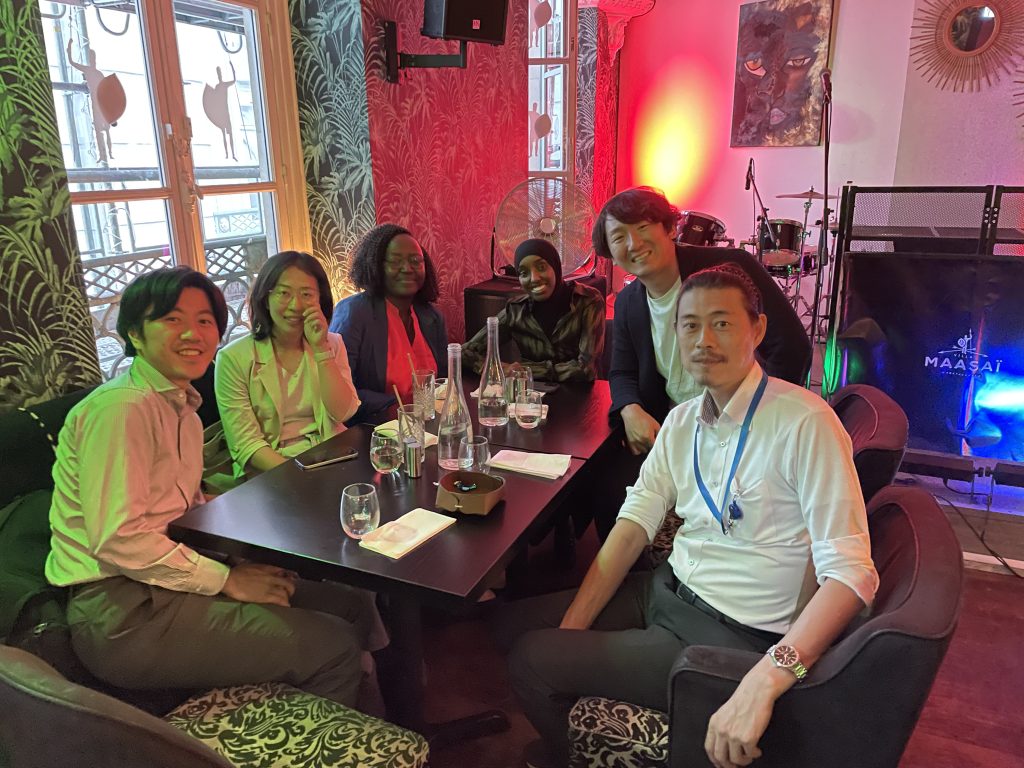
Q: Please share your story of a rewarding moment as a UNESCO staff member if you have one.
Because my job is aimed at developing countries around the world, the challenges of each country, how work is approached, and areas of expertise of the regional office colleagues are diverse. For that reason, whenever there is a request or opportunity for support, we discuss with the regional office colleagues what kind of proposal would be best and establish the project framework. This task greatly stimulates my intellectual curiosity. Also, I feel a great sense of accomplishment when the project makes the local people happy.
For example, in the Republic of Rwanda where I went on a business trip in early spring, we implemented a Disaster Risk Reduction AI Chatbot project 4 years ago. Since it was during the COVID-19 pandemic, I wasn’t able to conduct an on-site visit. But I felt really happy to hear the local government official say, ‘I wanted to meet you, the person behind this project. Many people in the ministry are saying they want to further develop this Chatbot.’
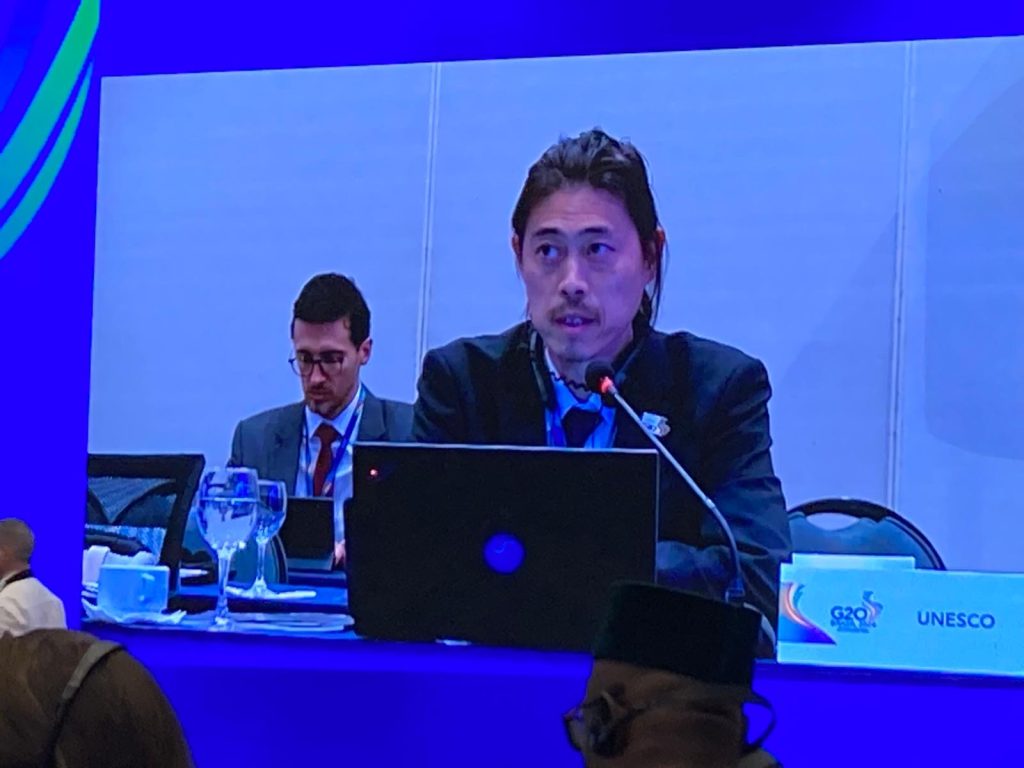
Also, I participated in the G20 Summit in Brazil recently. The G20 has a Disaster Risk Reduction Working Group, and UNESCO is one of its supporters. At the request of the Government of Brazil, UNESCO compiled a collection of case studies of Ecosystem-based Disaster Risk Reduction and published it on 31 October. UNESCO received special thanks in the Ministerial Declaration adopted at this Disaster Risk Reduction Working Group Meeting. The wording adjustments of the Ministerial Declaration were difficult, since a series of proposals and modifications were submitted from various countries until the final stages. But when we emphasized UNESCO’s significant contribution to the G20, the head of Brazil’s SEPDEC, which is the secretariat, proposed a sentence expressing special thanks to 3 organizations including UNESCO. Since there were no objections from other countries, it was incorporated into the declaration as is. I felt that my hard work had paid off.
I also feel a sense of accomplishment in, not just implementing projects, but also in looking at the big picture of disaster risk reduction activities conducted by each country and department and thinking about the future course of action of UNESCO’s disaster risk reduction programme.
Q: Do you have any advice to people who wish to work in international organizations such as UNESCO?
Many interns have come to the Disaster Risk Reduction Unit over the years and have worked hard. A certain percentage of them strongly wish to continue working at UNESCO, but there aren’t many opportunities, so they leave. What I always tell them is, ‘UNESCO isn’t the only place you can work, and what’s more, disaster risk reduction isn’t your only job.’ The younger generation today seems to have very limited job opportunities. So, I advise them to take any chance that comes up and give it your all. My opinion is, that you might develop a new interest while you are there, or you can look for a different job you wanted to do, once you have become financially stable by working.
I think language skills are very important, and this also applies to anyone who wishes to work at an international organization other than UNESCO. Japanese people have solid expertise, provide high attention to details, and have a strong sense of responsibility. But since they can’t explain them in other languages (mainly in English), there are unfortunate cases where they are underrated. I think it is important to be able to express your thoughts in foreign languages, not only about your field of expertise but also in daily conversation.
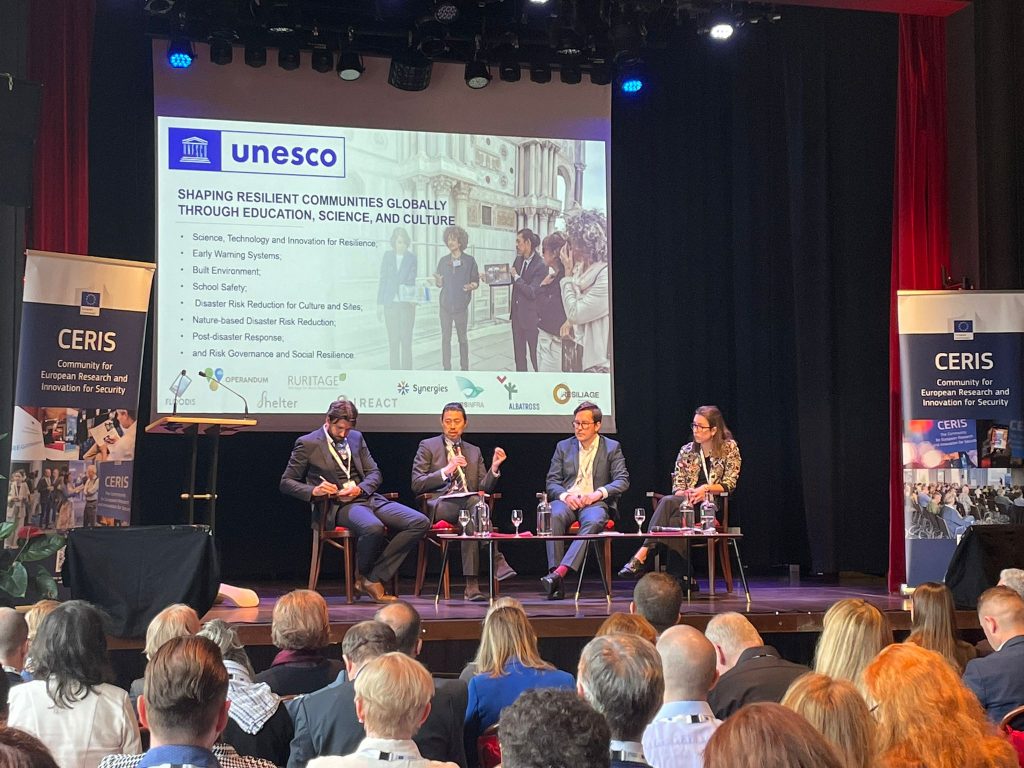
Q: You are speaking at the Youth Forum of UNESCO WEEK 2024/25. There are many people who are engaged in a variety of local-level activities, or so-called ‘UNESCO activities,’ because they resonate with UNESCO’s philosophy. As a UNESCO staff member, what do you expect from them, especially young people?
In Japan, when it comes to UNESCO, the Culture Sector’s World Heritage properties are famous. But the Education Sector’s ‘Education for Sustainable Development’ is the next thing that is gaining attention. However, in the Culture Sector, as well as World Heritage there is the Creative Cities Network. And in the Education Sector, a program for considering how to use AI in education is in progress.
In UNESCO, there are the Natural Sciences Sector, Intergovernmental Oceanographic Commission, Social and Human Sciences Sector, and Communication and Information Sector, besides the Culture Sector and Education Sector. And various initiatives not widely known in Japan are being implemented by them. For example, the Natural Sciences Sector handles activities like disaster risk reduction and ‘International Decade of Sciences for Sustainable Development’ activities, the Intergovernmental Oceanographic Commission handles ‘the Ocean Decade,’ the Social and Human Sciences Sector handles AI ethics, and the Communication and Information Sector deals with themes such as how media should communicate disaster information.
I want young people to learn about UNESCO’s wide range of activities. For example, if you access UNESCO’s Draft Programme and Budget for 2024-2025 (called 42 C/5 in the UNESCO documents), you may gain a deeper understanding of UNESCO activities. I am happy I was able to share a little about my job today, and I truly appreciate the opportunity to be interviewed like this.
Q: This is the last question. The key phrase of UNESCO WEEK 2024/25 is ‘Creating a sustainable and inclusive future.’ What kind of future do you envision from the phrase ‘Creating a sustainable and inclusive future?’ And please give a message to our readers.
Many people may have a shared image of ‘a sustainable and inclusive future.’ For example, a world without conflict, a climate-resilient and sustainable society, the end of poverty, a society where everyone feels a sense of purpose, and an environment where everyone has access to clean air and water. However, I think there is still no shared opinion on how and in what order of priority we should realize these visions within limited resources.
I myself don’t have all the answers, but I’m convinced that science and technology have great potential for the realization of these visions. Especially recently, AI is used in a wide variety of fields, but many people are feeling anxious about this. Regarding the advancement of science and technology, of course we need to have careful discussions about its ideal form, but it defeats the purpose if this discussion hinders the development of science and technology itself.
The power and awareness of every single person makes a difference in realizing a sustainable and inclusive future. Taking UNESCO Week as an opportunity, I hope everyone will think about this future and take action.
DATA
| Interview | Conducted in November 2024 |
|---|---|
*This is an English translation of an article that was originally written and published in Japanese on 25 November 2024 (https://unesco-sdgs.mext.go.jp/column/unesco-story-20241125). |